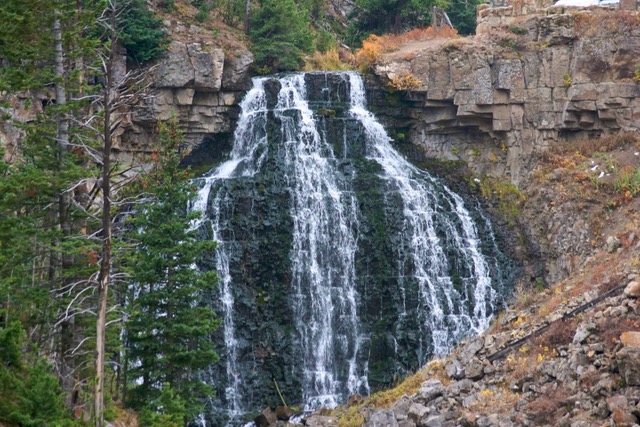
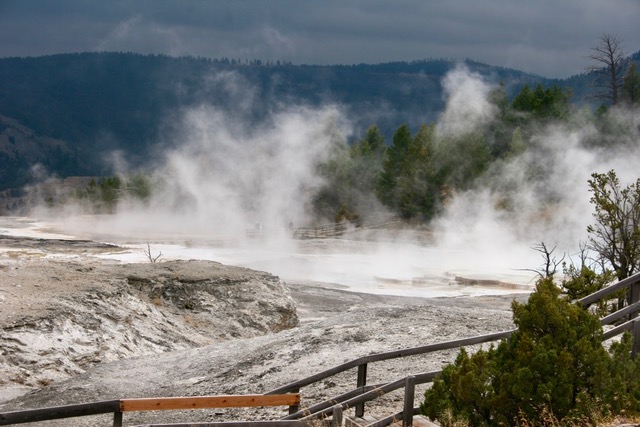
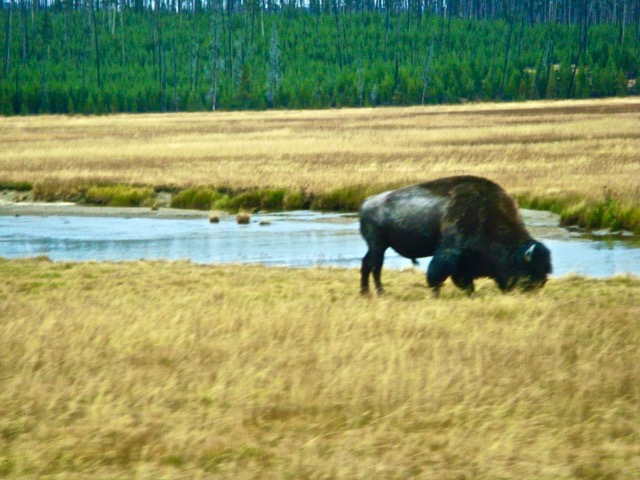
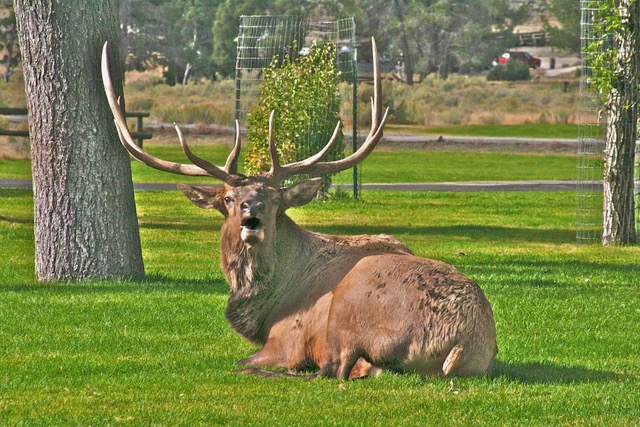
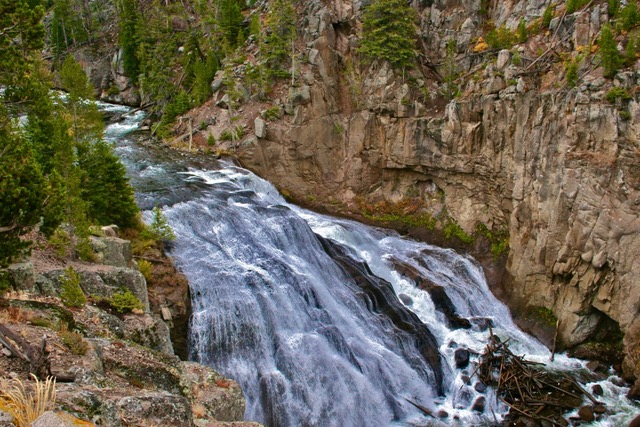
Started the day with Mass at St William in Gardiner, Montana, then drove through the Roosevelt Gate at the northern entrance to Yellowstone National Park. We were greeted almost immediately with two herd of elk near the Mammoth Hot Springs Lodge. At one point the two males were bugling at each other and we realized that we were in between them – not a good place to be. We did escape without incident to enjoy a day of learning more about the history of the national park system, marveling at the geothermal features of the park, and admiring the wildlife – from a distance! At the end of the day we found lodging, good food, and new friends in West Yellowstone, Montana. Tomorrow we will go back into the park and see more of this wonderful place.
Mad St. Pete Jen
on September 22, 2008 at 10:28 am
Hi guys! This is the first chance I’ve had to check out your blog, and it is amazing! I can’t believe all these wonderful photos are taken by you — they’re like something out of National Geopgraphic! So much fun to share your adventures this way — you are both very missed in the Sunshine State! Paula and I haven’t gone swing dancing yet but are making plans to go soon — much love & hugs to you both!
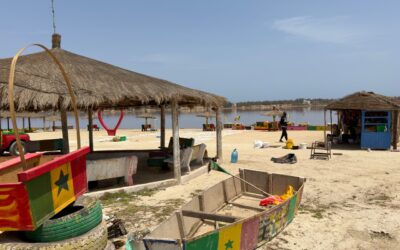
Queen Mary 2’s arrival in the Port of Dakar, Senegal was heralded in the local press and greeted with ceremony. Our own excursion took us on a coach journey through the streets of the capital city to visit a Wolof village and the shore of Lake Retba, the salty lake famed for an intense pink color.
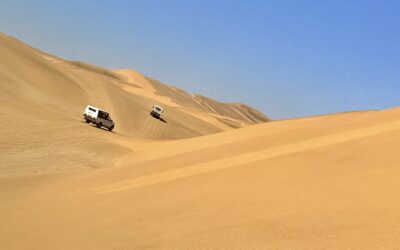
Today’s safari adventure transported us out into the Dorob National Park to have up close encounters with little creatures that are well adapted to the extreme heat and lack of water in the Namib Desert.
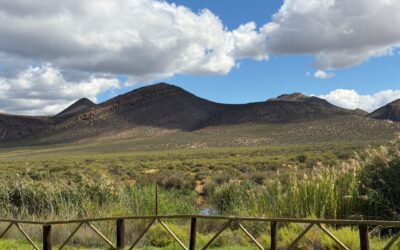
With a UNESCO World Heritage Site, two national parks, dozens of museums, and hundreds of tours offered in the Cape Town area there is more than plenty to do. For our two day visit we opted to concentrate on African wildlife visiting the Aquila Private Game Reserve and the Boulders Beach Penguin Colony for a wonderful chance to these fabulous animals in their own habitat.




very cool , thanks for sharing the trip.
mark .
Hi guys! This is the first chance I’ve had to check out your blog, and it is amazing! I can’t believe all these wonderful photos are taken by you — they’re like something out of National Geopgraphic! So much fun to share your adventures this way — you are both very missed in the Sunshine State! Paula and I haven’t gone swing dancing yet but are making plans to go soon — much love & hugs to you both!
LOL! I am loving this journey! Thanks again for sharing your wonderful, photo-filled adventures. Look forward to seeing you soon. Happy Trails!