



Wednesday 15 April 2026
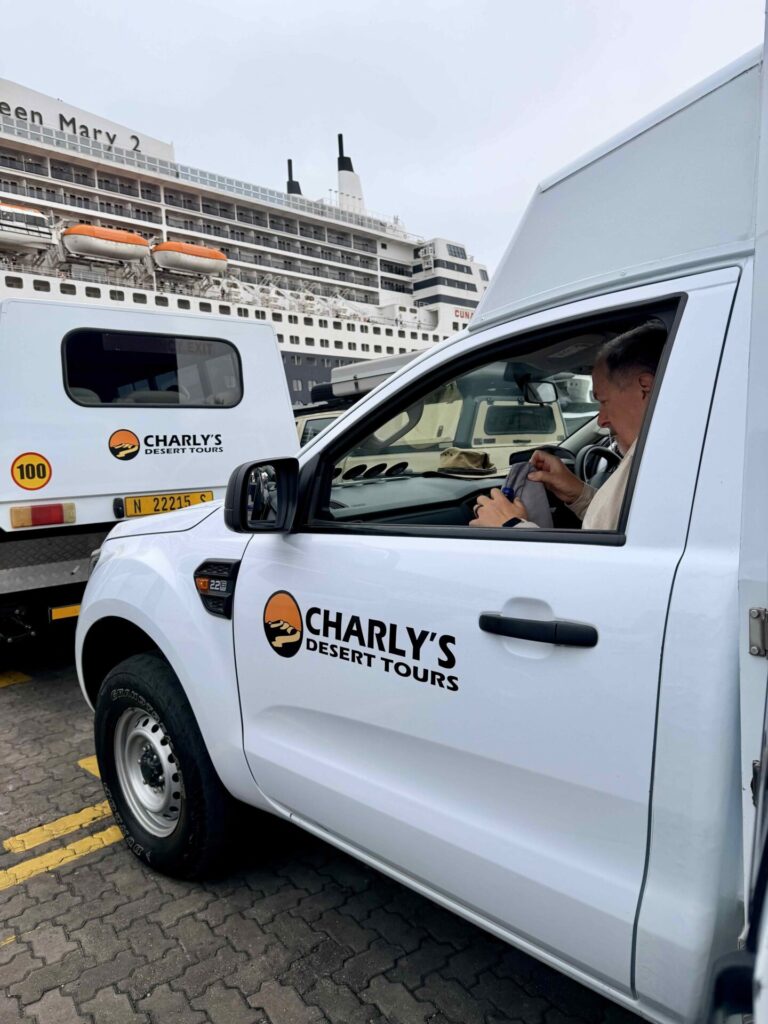
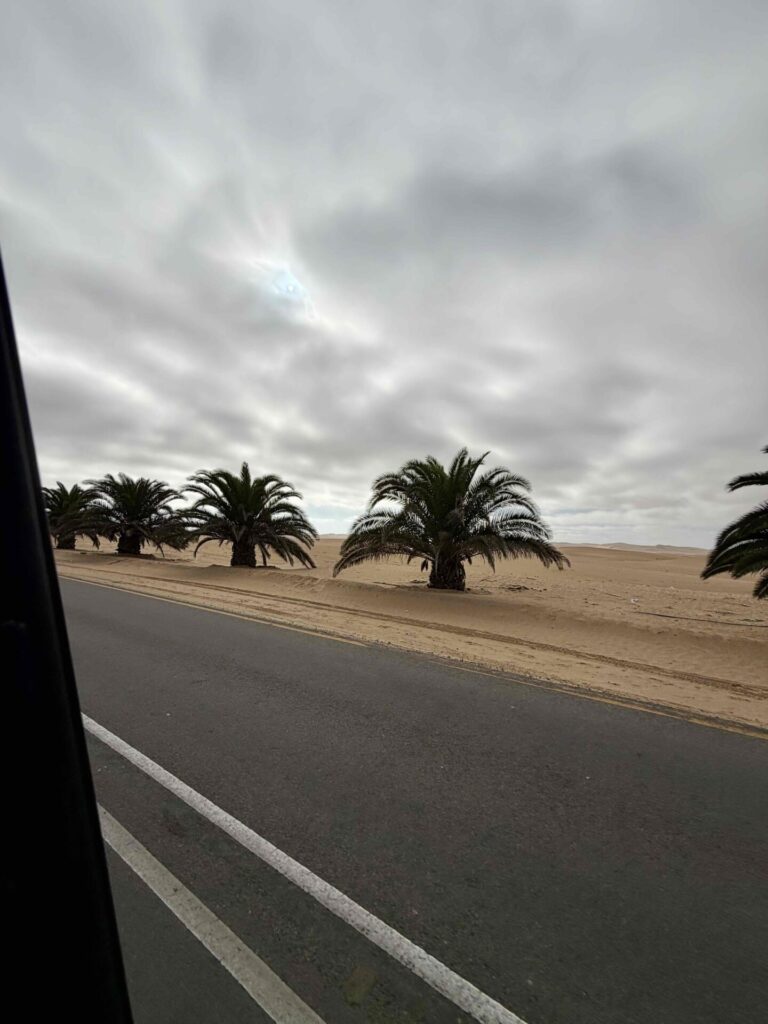
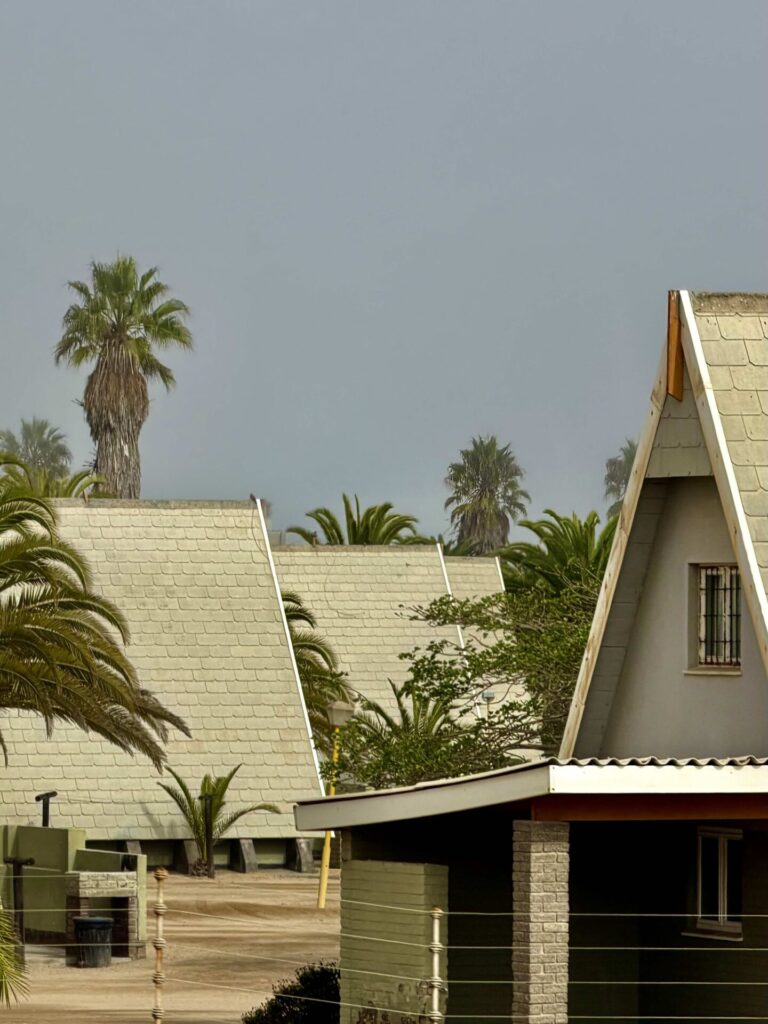
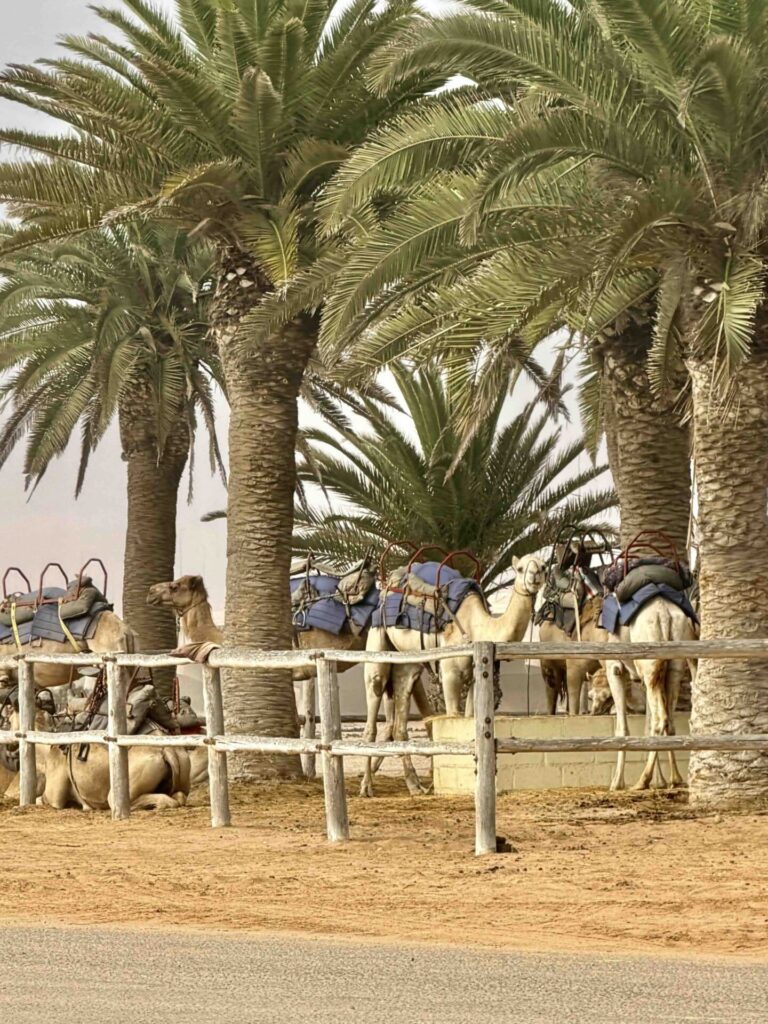
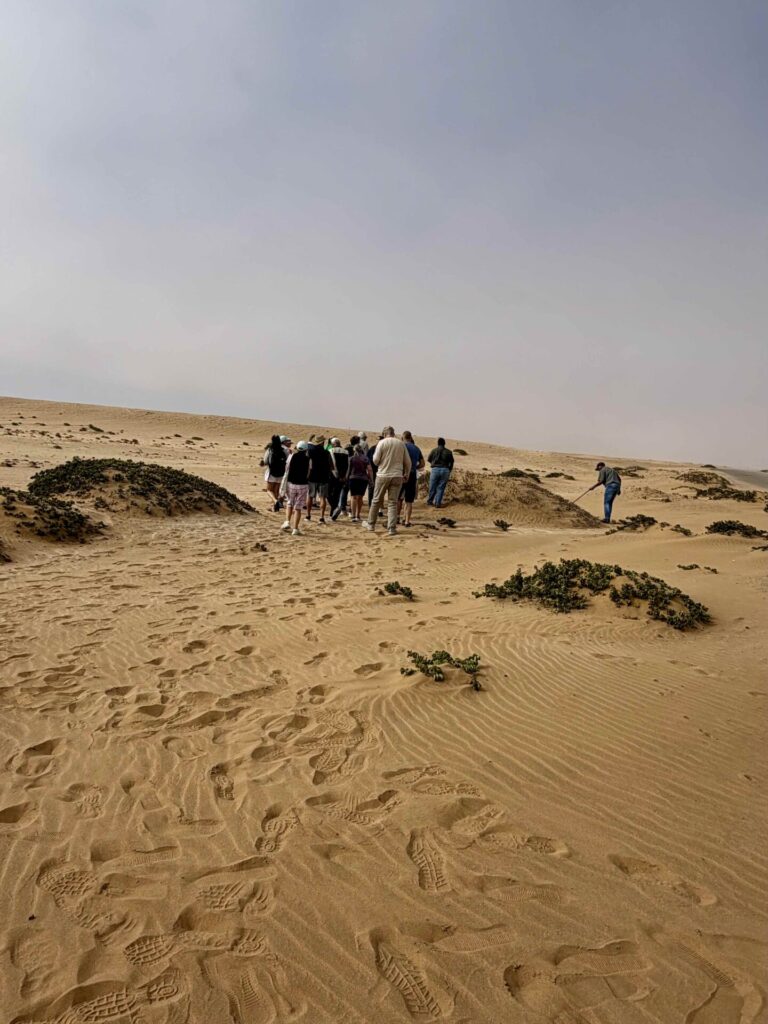
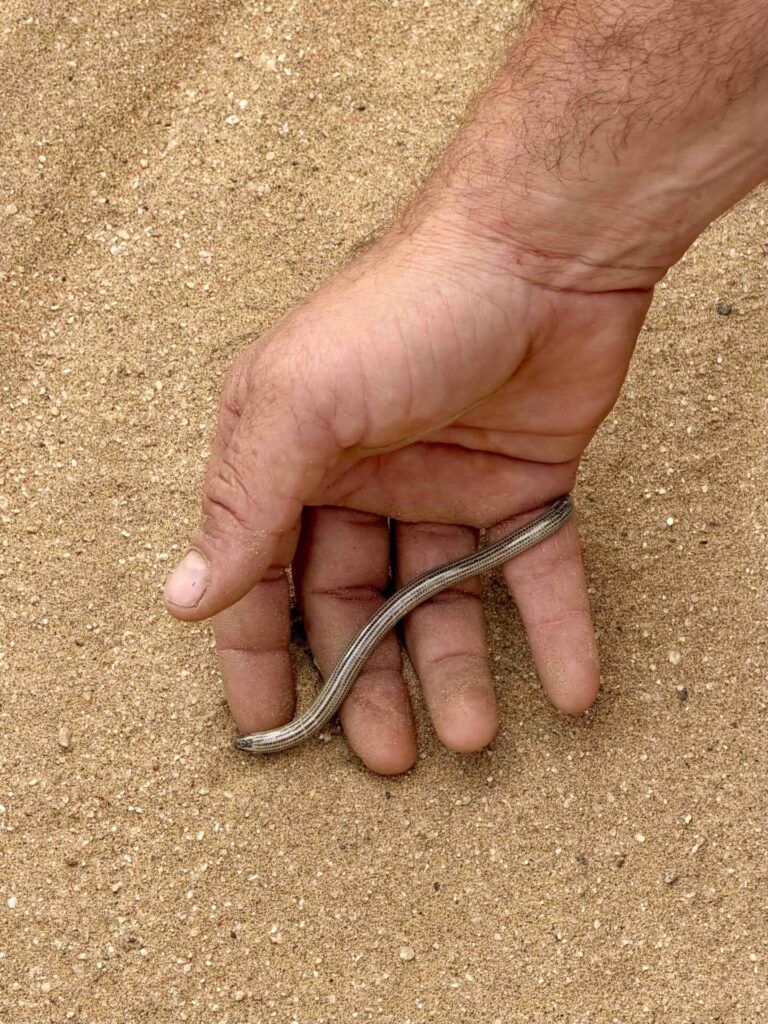
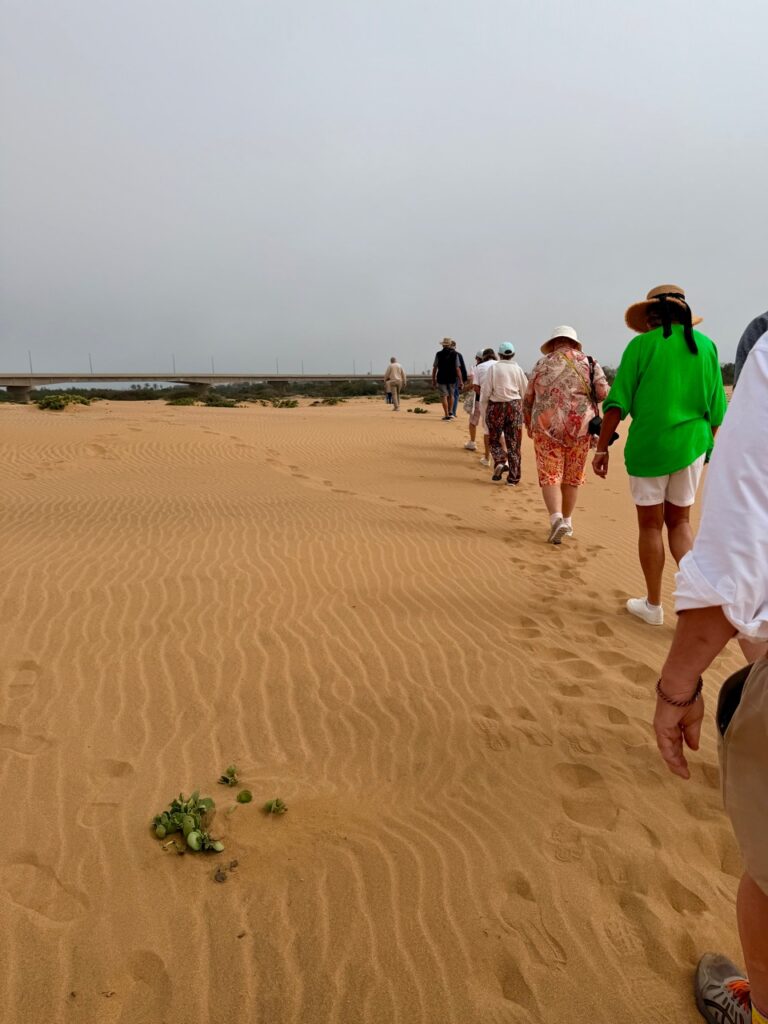
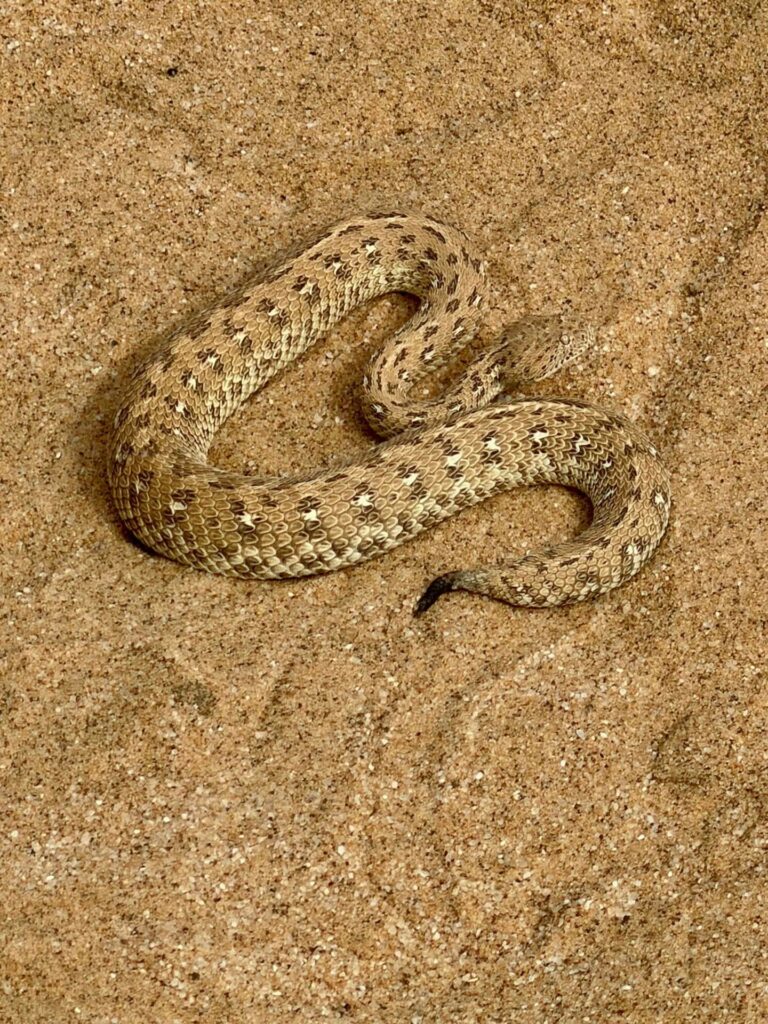
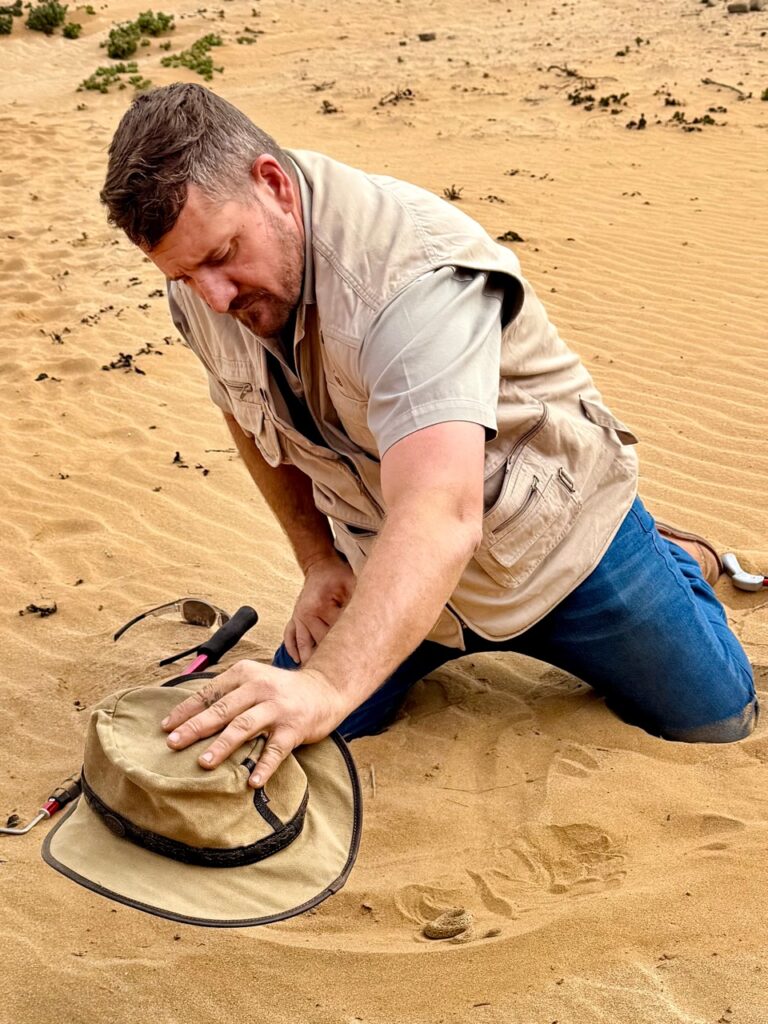
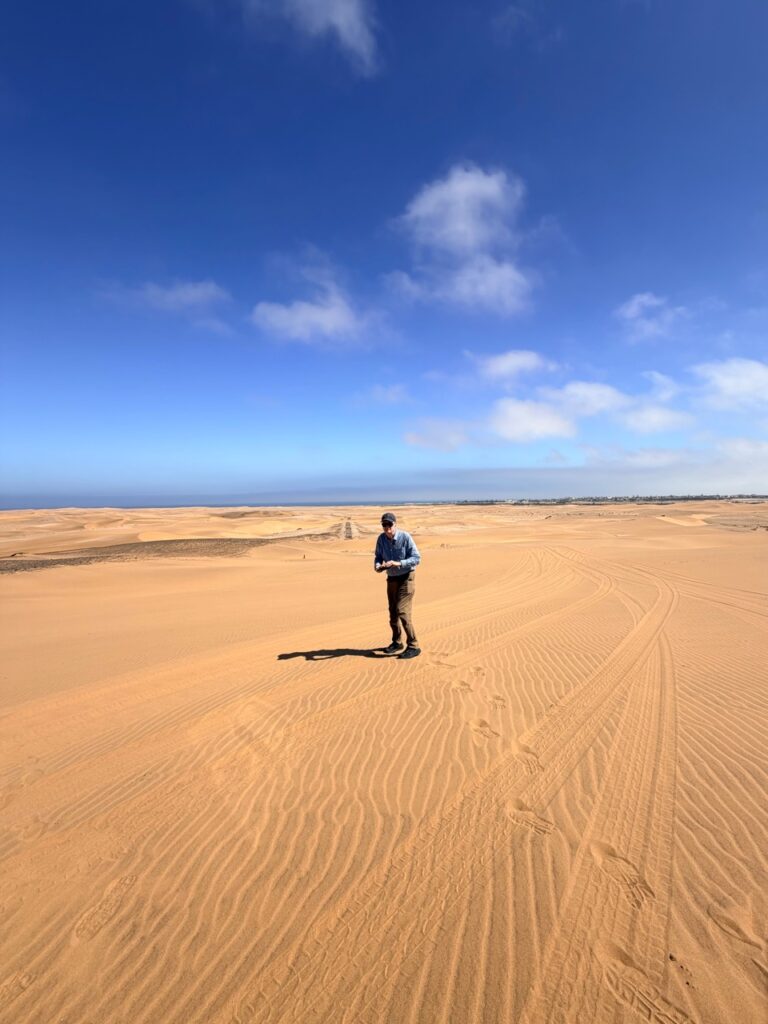
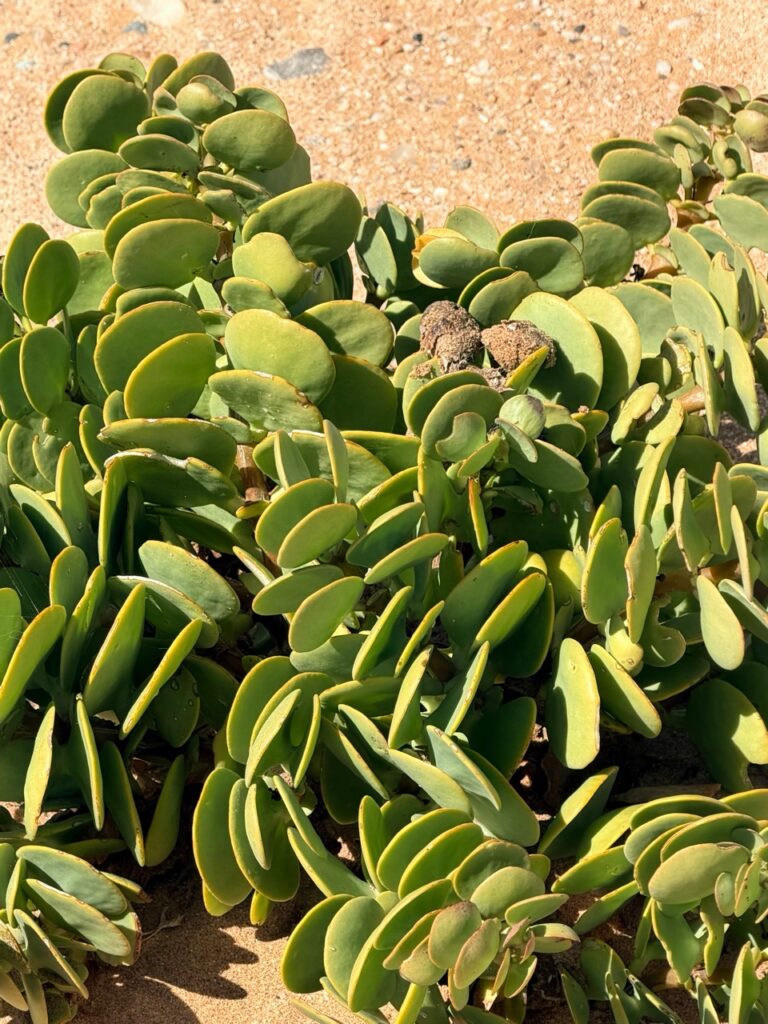
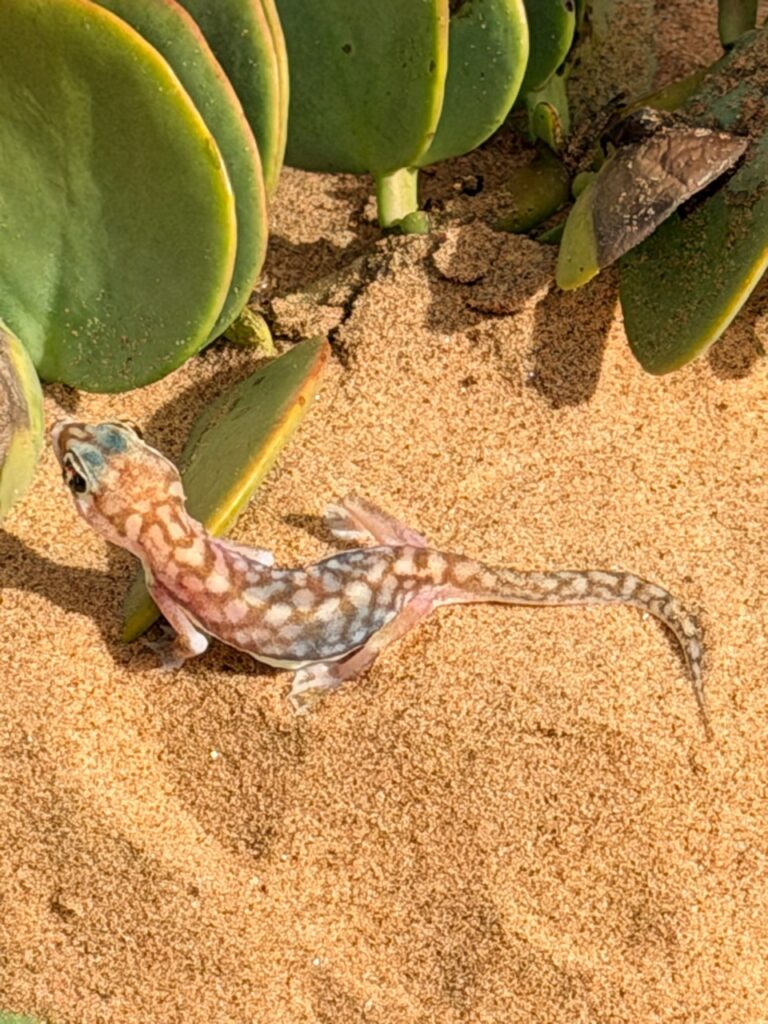
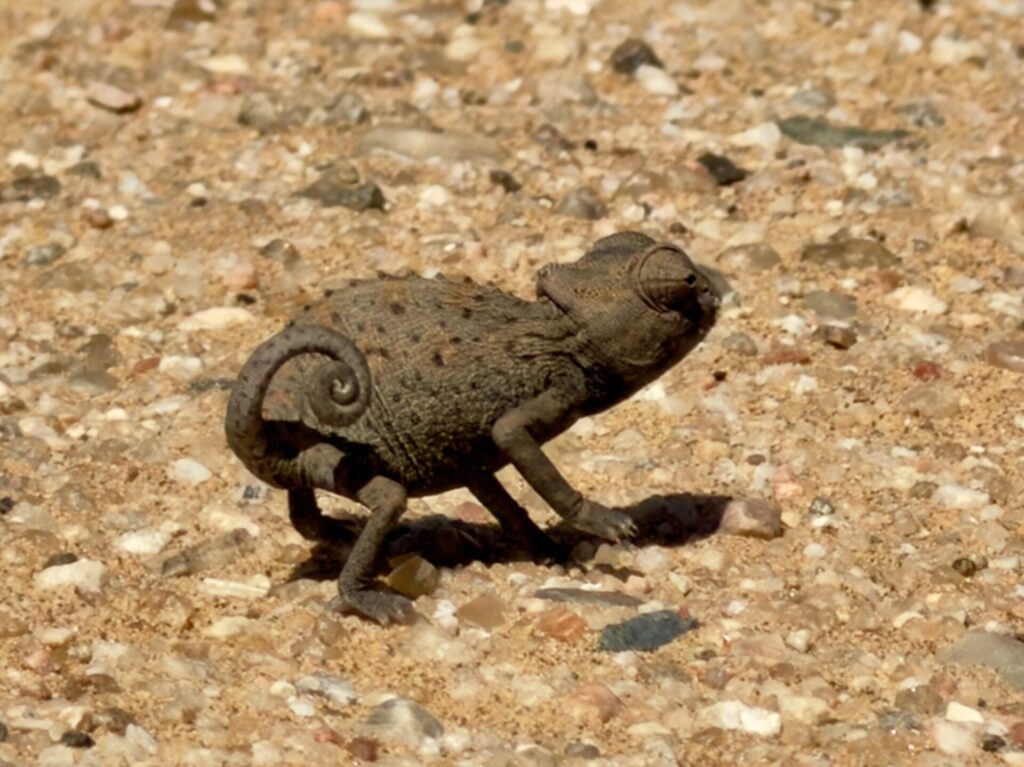
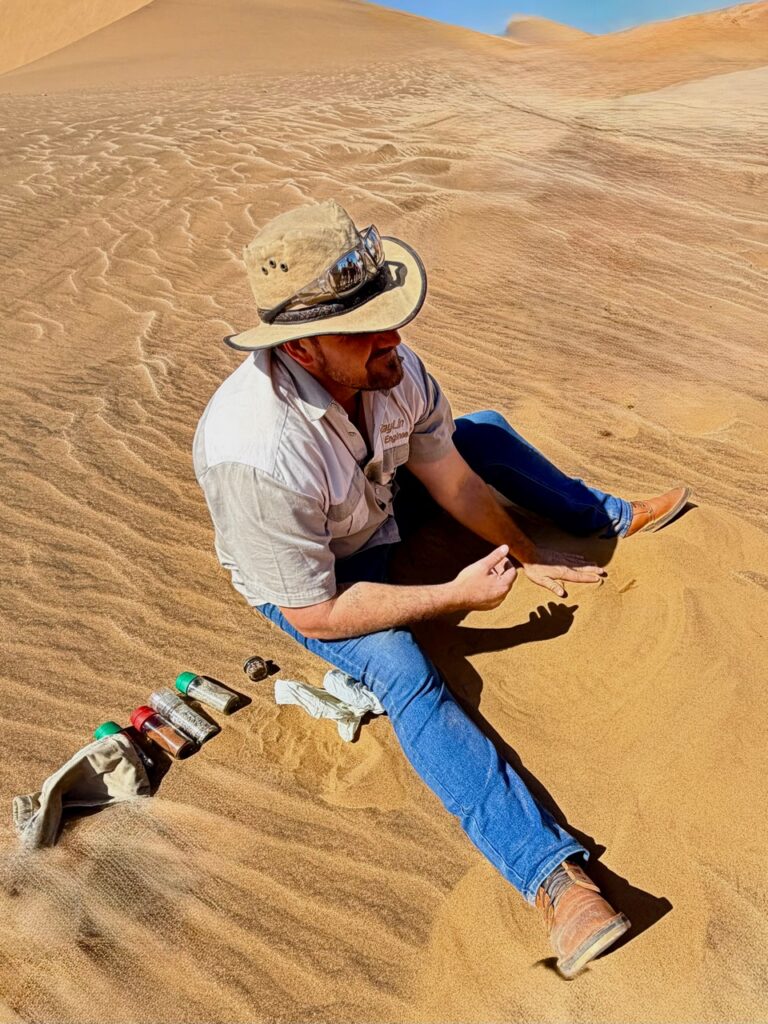
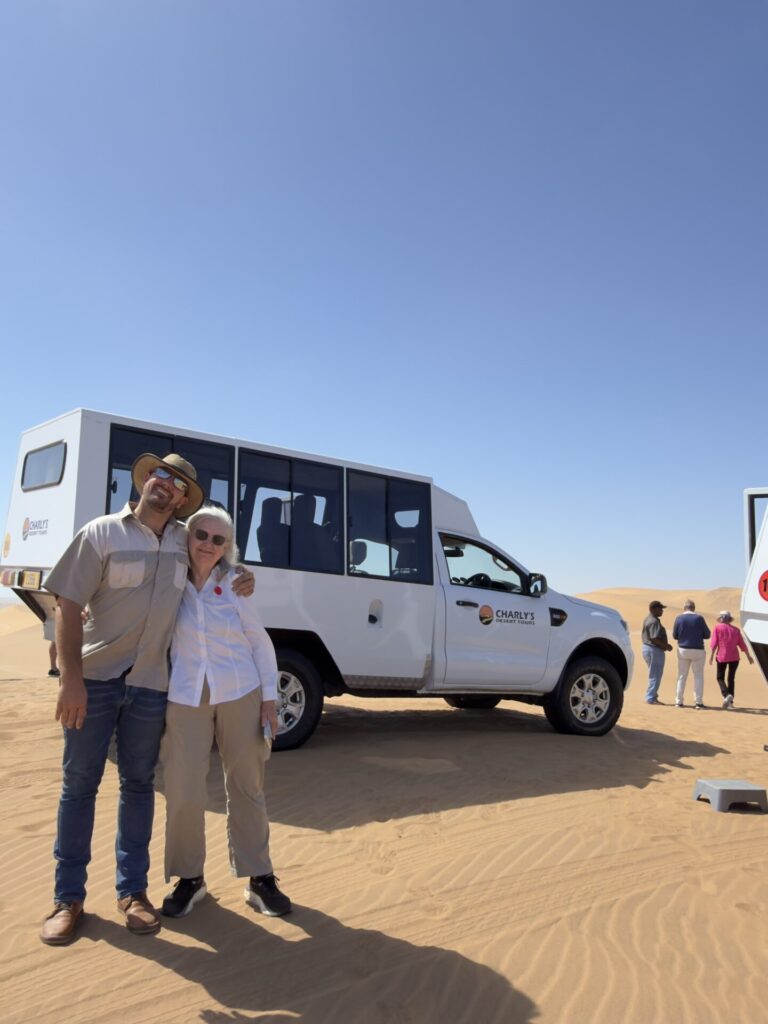
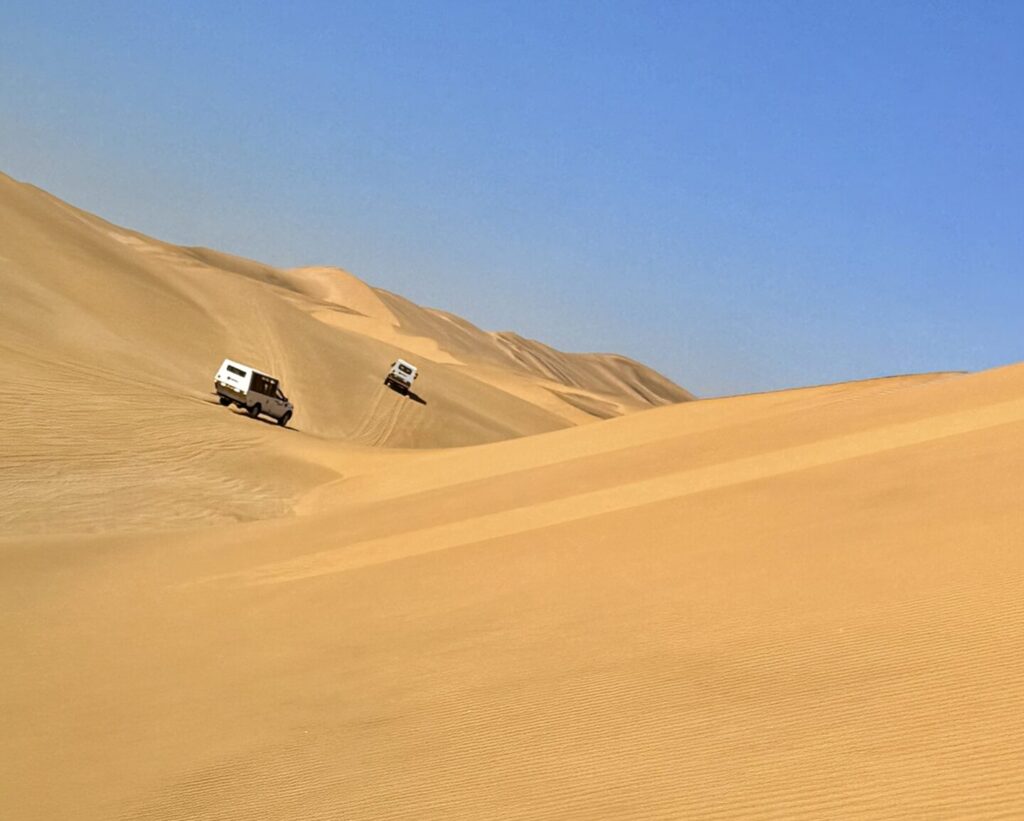
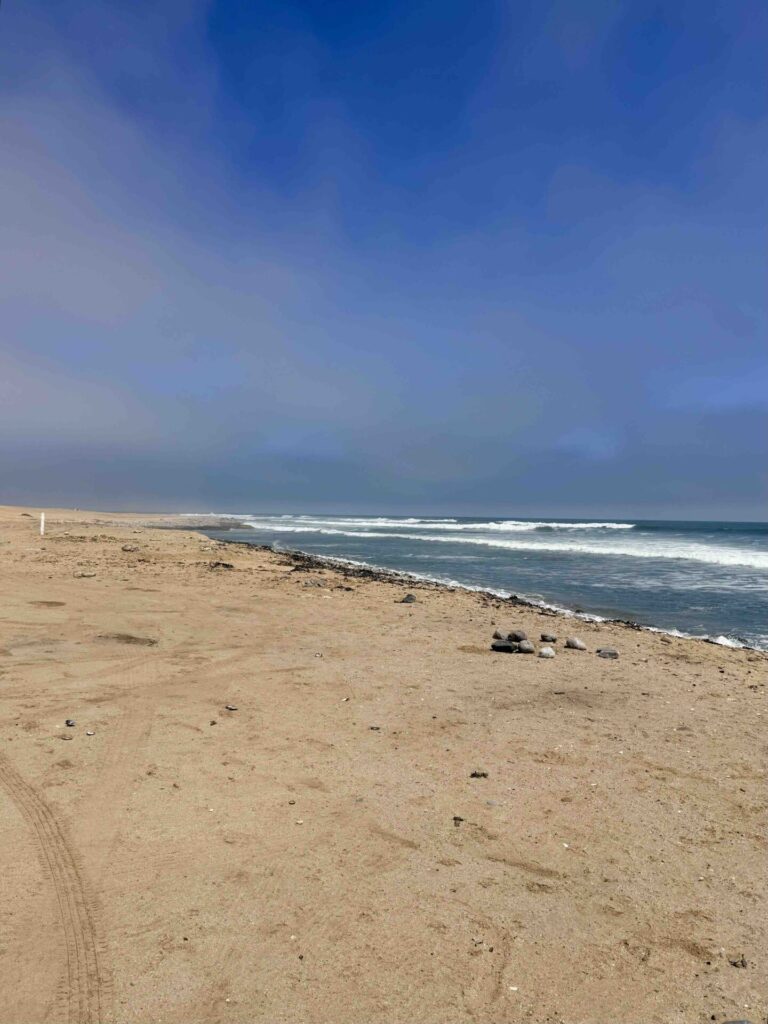
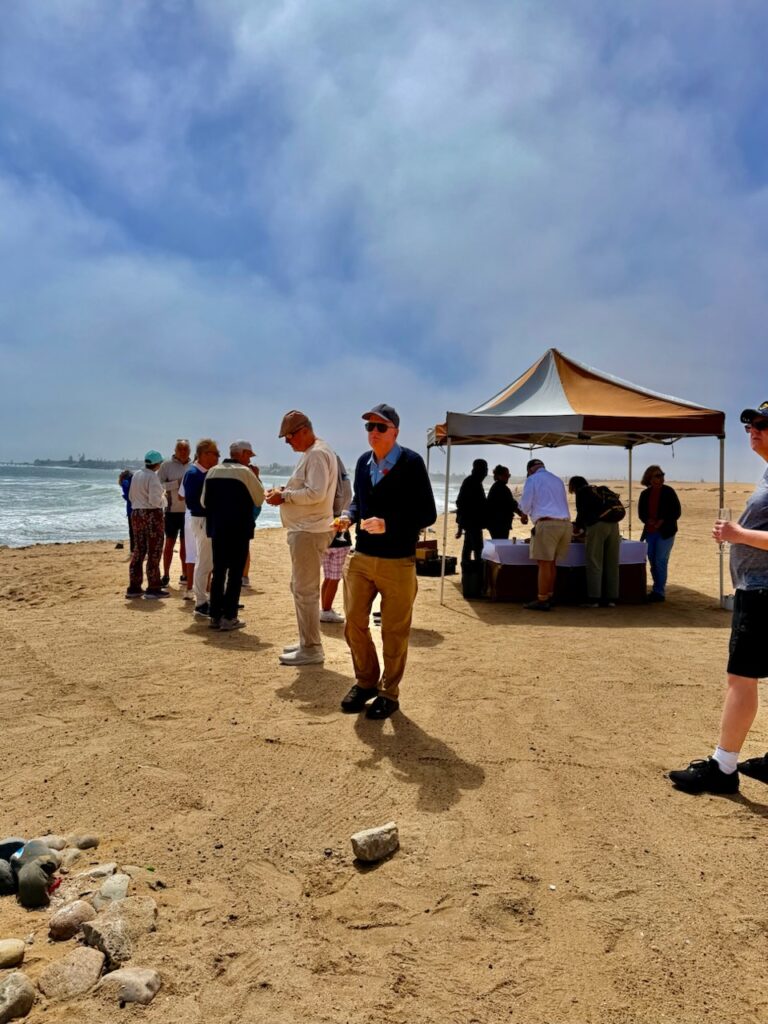
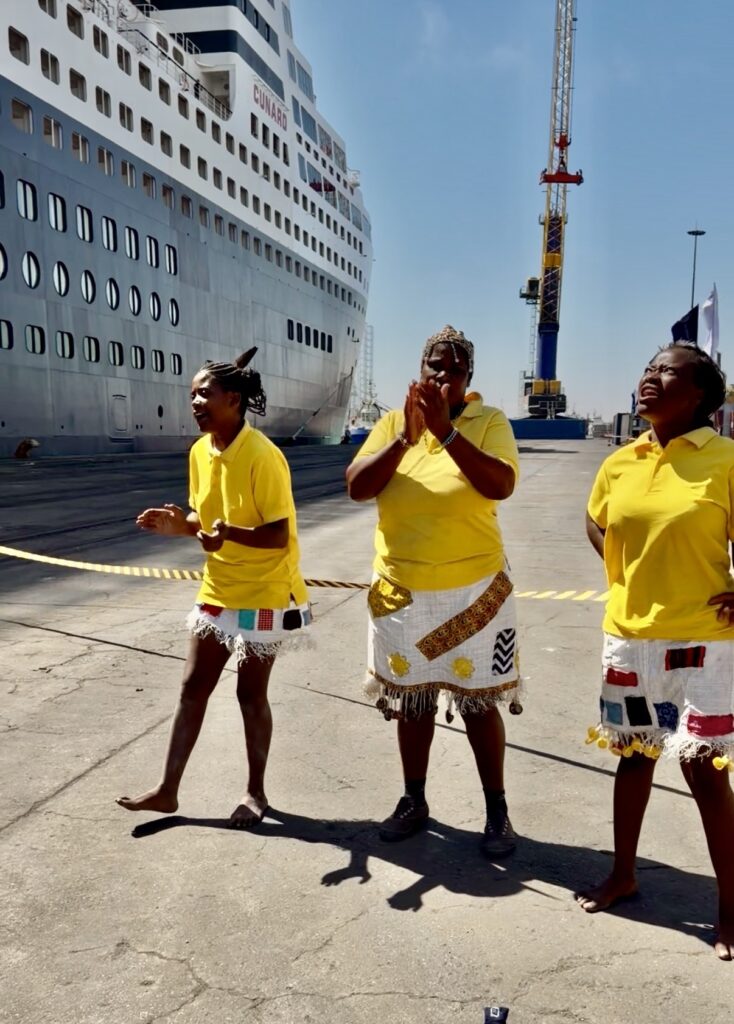
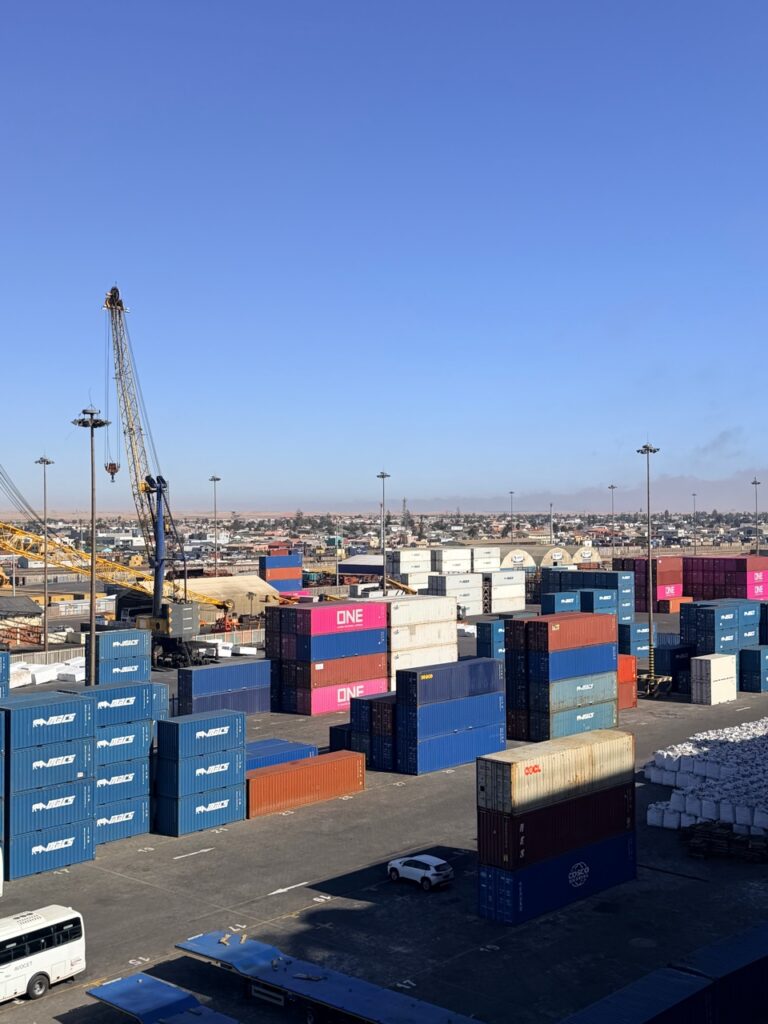
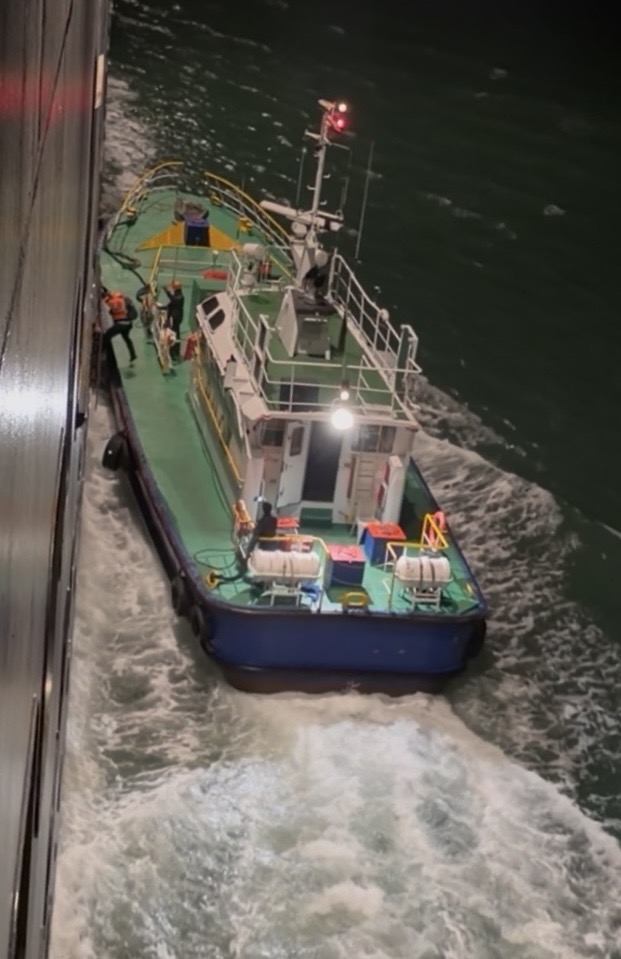
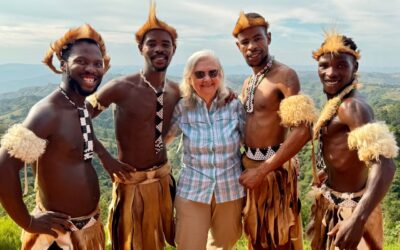
Another day, yet another safari. This time we’re in search of desert critters. At the port of Walvis Bay, Namibia, we clambered into one of three “Charley’s Desert Tours” 4×4 vehicles and headed off into the desert. Namibia seems to be nothing but desert. As we traveled a few miles north from Walvis Bay to Swakopmund we noted houses and commercial buildings surrounded by desert along a highway perfectly lined with palm trees and learned from our guide PJ, a third generation Namibian, that the drivers of the other two vehicles in our caravan were Jonathan and Emmanuel, both expert trackers of the tiny critters we were headed out to find. Along the way to Dorob National Park he peppered us with a wealth of information giving us an overview of not only the history but of life today in this country that once was the German colony of Southwest Africa. Most of the GDP relies on mining, agriculture, and fishing, followed by tourism with medical tourism a growing sector of the economy. After nearly an hour of driving we made a quick comfort stop giving us a brief glance at some camels, which are not native to this part of Africa, poised to provide rides for tourists. We however continued on in search of other much smaller critters. Understanding that something as simple as walking across the sand could threaten the life animals that burrow into the sand to escape the brutal heat of day, we all agreed to walk in single file as we traveled across the dunes. The first Namib resident that our trackers discovered lurking in a stand of low growing succulent dollar bush was a Cape sand racer, once we’d all gotten a good look and PJ released him, this slender snake moved rapidly back into the shelter of a stand of dollar bush be on the lookout for lizards or rodents passing by to provide him some lunch. At another nearby location we made the acquaintance of a FitzSimmons burrowing skink, a legless lizard that ventures out only at night to hunt. To make sure we were able to get some excellent photos PJ got down flat on his belly to release the critter then dig him up and repeat the process half a dozen times. It was amazing to watch the skink escape the hot surface in no more than one second flat. The next stop was just a short ride away where we met the star of today’s show a Peringuey’s Adder, it’s a side-winder that burrows into the sand in such a way as to be able to lookout for passing prey. Its bite will cause not only pain and swelling but death of the cells in the part of the body that’s been bitten. With that knowledge, we all kept a respectful distance as PJ controlled the snake’s behavior with the shadow of his hat. Once he was returned to where Jonathan and Emmanuel had found him, we got to meet a Namib Sand Gecko, a little web-footed reptile that makes it home in deep burrows under the desert sand and emerges at night to hunt. Also known as the Dune Gecko or the Palmetto Gecko, it’s a favorite food of its neighbor, the sidewinder. After a stop for a short lesson in the geology of the Namib Desert we finally got to an opportunity to observe a young Namaqua chameleon. Although it operates during the day it still relies on burrows under the surface for shelter. As a chameleon it does change color but uses that ability to warm up or cool down rather than for camouflage. Our drivers did give us the thrill of a bit of dune riding but kept it to a minimum to limit ecological damage. As the adventure was drawing to a close, it was time to add some air back into the tires for the highway journey back to port. While the drivers took care of that chore we were treated to a wine and cheese beach break. The day was incredible. Not only did we enjoy the encounters with critters that to many visitors are completely invisible desert dwellers but we also had the very humbling experience of standing in the middle of the desert with nothing but sandscapes in all directions as well as the chance to walk along a narrow strip of gravel, a line of demarcation between the oldest desert in the world and one of the greatest oceans on earth. Back at port we witnessed some locals dancing to a rendition of “The Lion Sleeps Tonight” which we learned originated in South Africa in 1939. From the deck of the ship we let our gaze wander beyond countless shipping containers to the rooftops of Walvis Bay then later in the evening we knew we were well underway in a northernly direction as we watched the local pilot leave our ship and jump onto the pilot boat. It’s been an incredible day with a wealth of experiences so far removed from our day to day life back in Ohio! We can’t help but be grateful to be blessed with the chance to make this journey.
What an awesome acount!!