

Saturday 13 September 2025
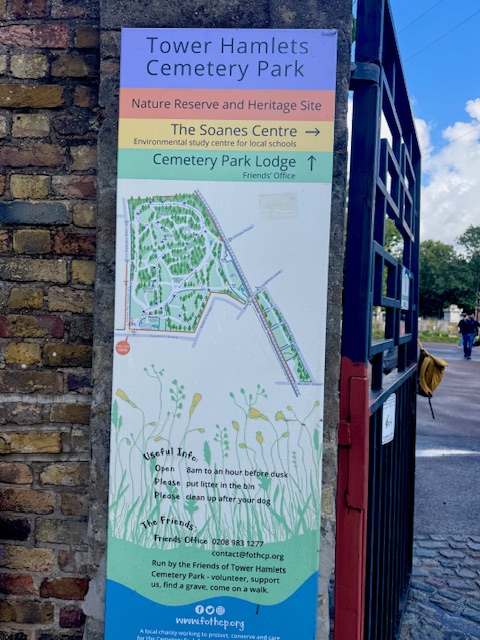
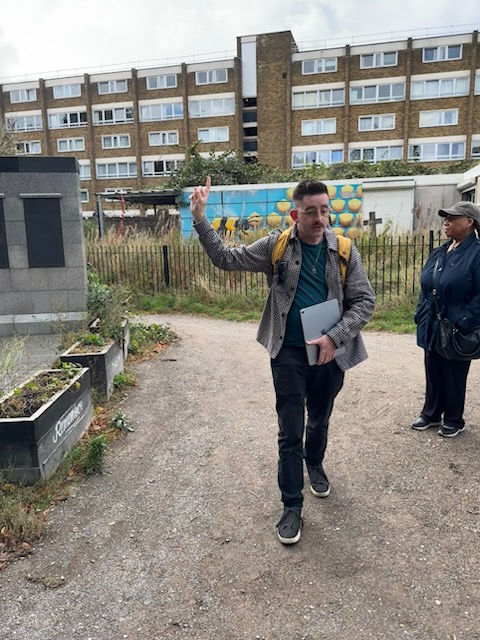
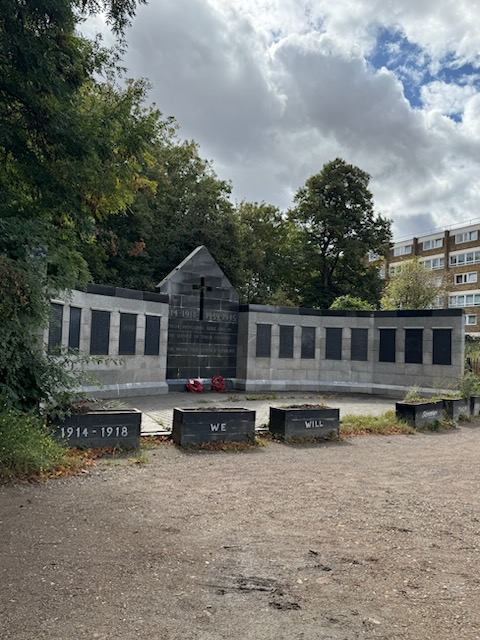
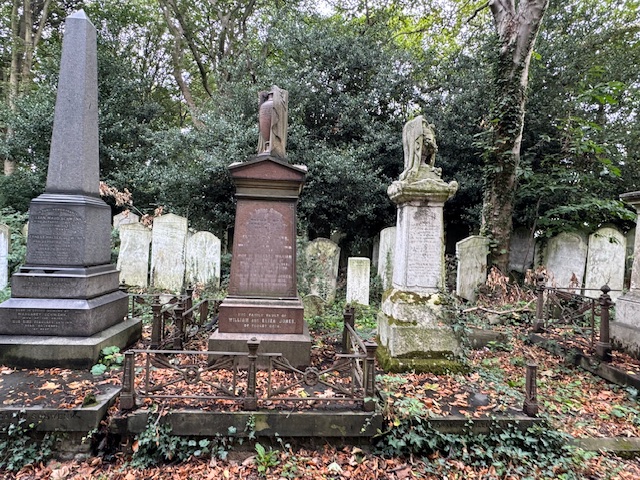
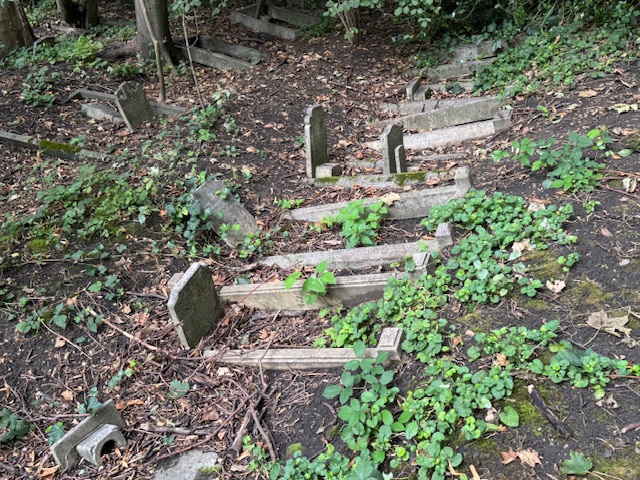
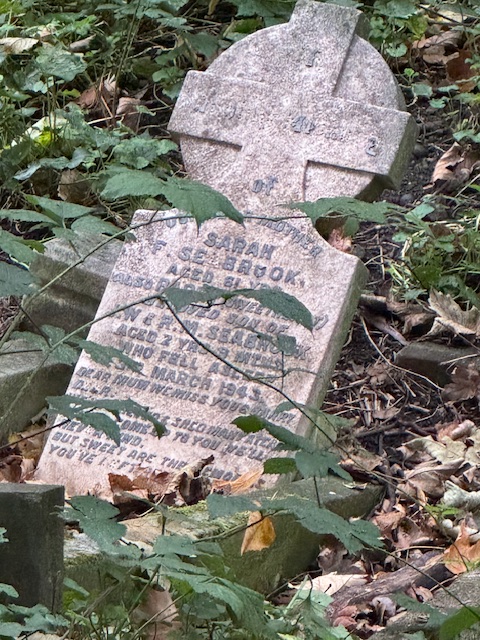
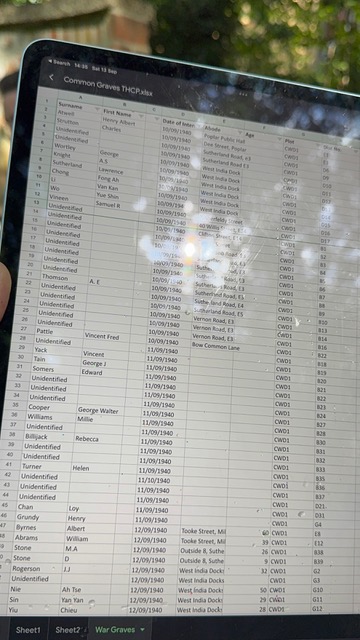
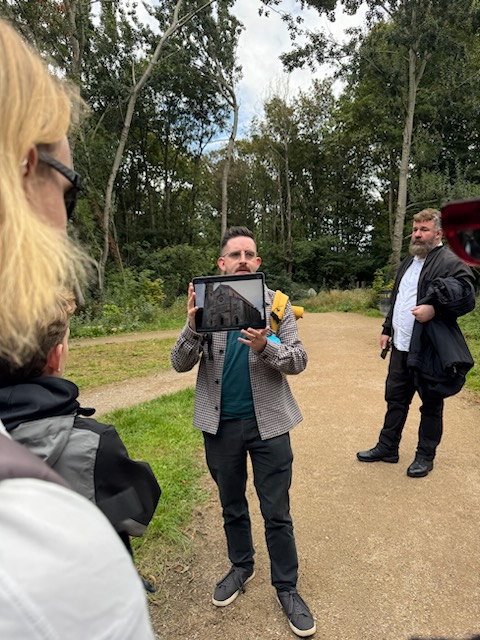
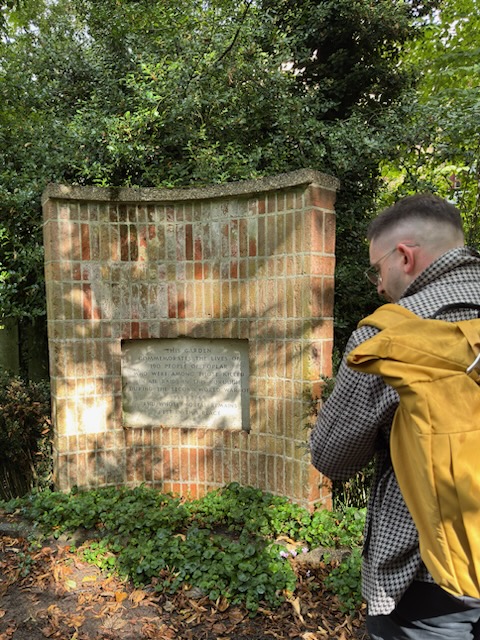
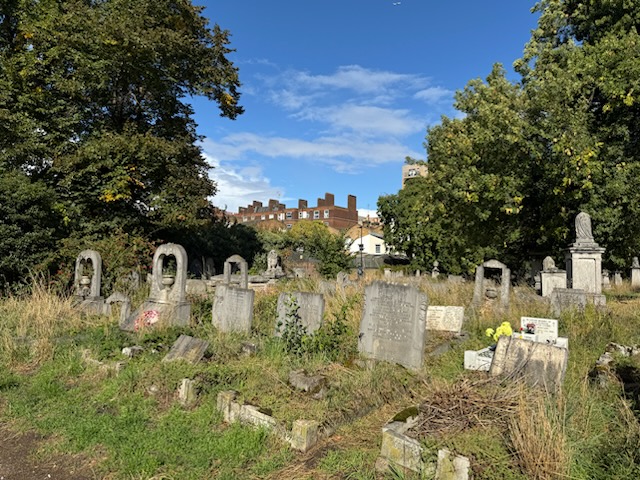
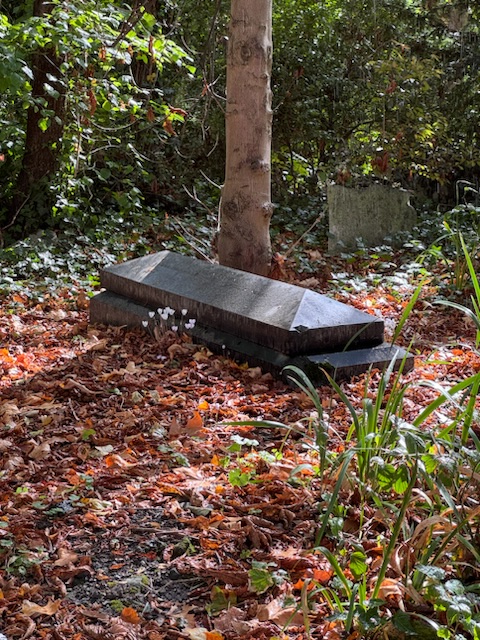
On Day 2 of Heritage Open Days in London we headed to Tower Hamlets Cemetery Park in East London where we arrived fifty minutes early for a WW2 Themed Heritage Walk. Soon enough we met Sheldon K Goodman, public historian and tour guide. Located in East London Tower Hamlets Cemetery is one of London’s Magnificent Seven Cemeteries established at intervals around the perimeter of London because all the parish churchyards had more than reached capacity. In fact the decaying matter beneath the surface led to shimmery blue lights known the Will-o-the-Wisp reportedly seen at night in these graveyards. So in 1841 Tower Hamlets Cemetery began accepting burials. By the time it closed to burials in 1966 its 27 acres contained 350,00 burials! Many are public graves for people whose families were unable to afford a burial plot not at all uncommon in the poorer neighborhoods of East London and often multiple unrelated bodies were buried together. That was particularly true during times of high rates of mortality such as the 1866 Cholera Epidemic in which most of the deaths were in East London. At that time the cemetery was burying up to eighty bodies a day. Not surprisingly the records of those burials is sketchy at best. As Sheldon described the density of burials he noted that there is nowhere in the cemetery where you can avoid walking over graves. Our tour began at the War Memorial, a tribute to those who died in the service during the Great War and the Second World War but does not include to civilian victims of war. The neighborhoods of East London bore the brunt of the massive bombing campaigns of The Battle of Britain. For years we’d seen images of the buildings demolished by bombs but we’d not really considered the aspect of burying the victims. The reality is that the cemetery was burying as many as 60 bodies daily. There was no time nor resources for individual funerals or individual burials. As we walked the cemetery which was originally designed as parkland and is now a recognized wildlife sanctuary we noted variations in ground level caused by the need to bury so many so quickly. A horribly tragic event happened quite nearby when 173 people seeking shelter in the unfinished Bethnal Green Tube station from an impending air raid perished in minutes in when a young woman carry a baby fell at the foot of the stairs causing hundred of people to fall on top of those ahead of them. In an effort to keep the populace calm the authorities pledged everyone to secrecy as they retrieved the bodies and the injured in quick order. The many of deceased were buried here side by side in a trench. A minority of those have grave markers showing the area though not the specific spot where they rest. The Stairway to Heaven Memorial at the station was unveiled in 2017 commemorating the worst civilian disaster of the Second World War. Sheldon is part of a movement to help us remember those who died not only in that event but to honor as many as possible. For example among the Bethnal Green victims was Sarah Seabrook and her young grandson, her granddaughter has shared her memories of learning of their deaths. For us it was an opportunity to visit a part of London we’d not yet experienced and a chance to get a more in depth feel for aspects of the experience of Londoners during the war. And it turns out we’re glad we didn’t head into central London today for we missed getting caught up a a mass of three million protesters.



0 Comments